Opal Spend
Fintech / Agency Spend Management
How Opal started generating 10+ demos per month through AI visibility

Emily Forster-Coull
COO, Opal Spend
“Working with Windgrove AI has been one of the best decisions we’ve made for our growth efforts. We noticed a significant increase in inbound meetings within a relatively short period, and the quality of the work has consistently exceeded our expectations.
Beyond the results, their communication has been exceptional. They don’t just share the wins - they’re equally transparent about what’s working, what isn’t, and how they’re adjusting their strategy. That level of honesty and accountability is refreshing and has made them a trusted partner.
If you’re looking for a team that’s knowledgeable, proactive, transparent, and genuinely invested in your success, I couldn’t recommend Windgrove AI more highly.”
10+
Inbound demos per month from AI search
13x
Increase in tracked AI brand mentions
11.2%
AI share of voice, up from 3.9%
#1
In its tracked Google AI Overviews set

Slack message from Emily confirming the increase in inbound
The Starting Point
When the engagement began in March 2026, AI systems had almost nothing to work with, no blog, no sitemap, weak metadata throughout and just four (4) pages were indexed across the site. The product was strong but the digital footprint was not which is why we got involved.
The Approach
We started with the technical layer, submitting the XML sitemap, restructuring robots.txt, introducing llms.txt, rewriting metadata across the site, improving heading structures and internal linking, and resolving the indexation issues affecting key product and landing pages. Once that was done, we moved to content.
The content strategy was built around questions Opal’s buyers were already typing into AI systems. We used Search Console data, prompt tracking, and topic analysis to decide what to build and in what order.
Over the engagement we published 60+ AEO-focused articles, reworked every core page, and put 13+ bottom-of-funnel pages into production. Every article was written for the specific prompts that buyers were typing at the time of evaluation during their decision making process.
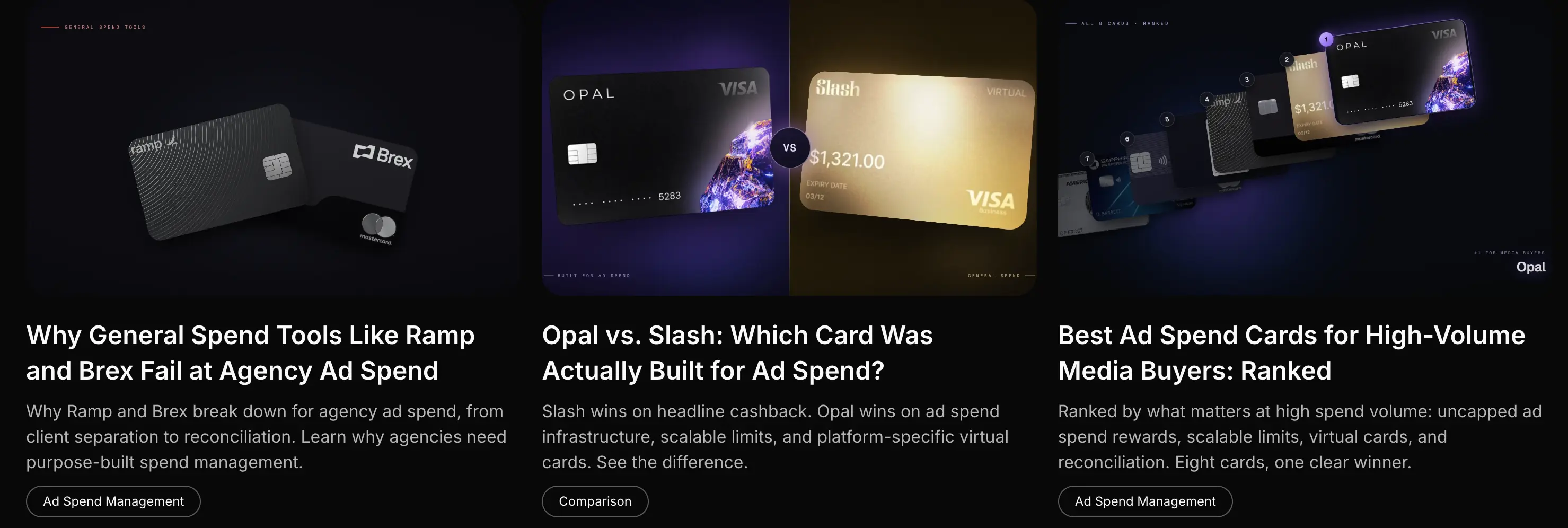
Sample articles from the content library: comparison pieces, category rankings, competitor breakdowns
The Results
13x
increase
Tracked AI brand mentions increased from 3 to 39 across the core tracked prompt set, a 13x increase. Share of voice increased from 3.9% to 11.2%, and Opal accumulated thousands of citations within its monitored answer set.
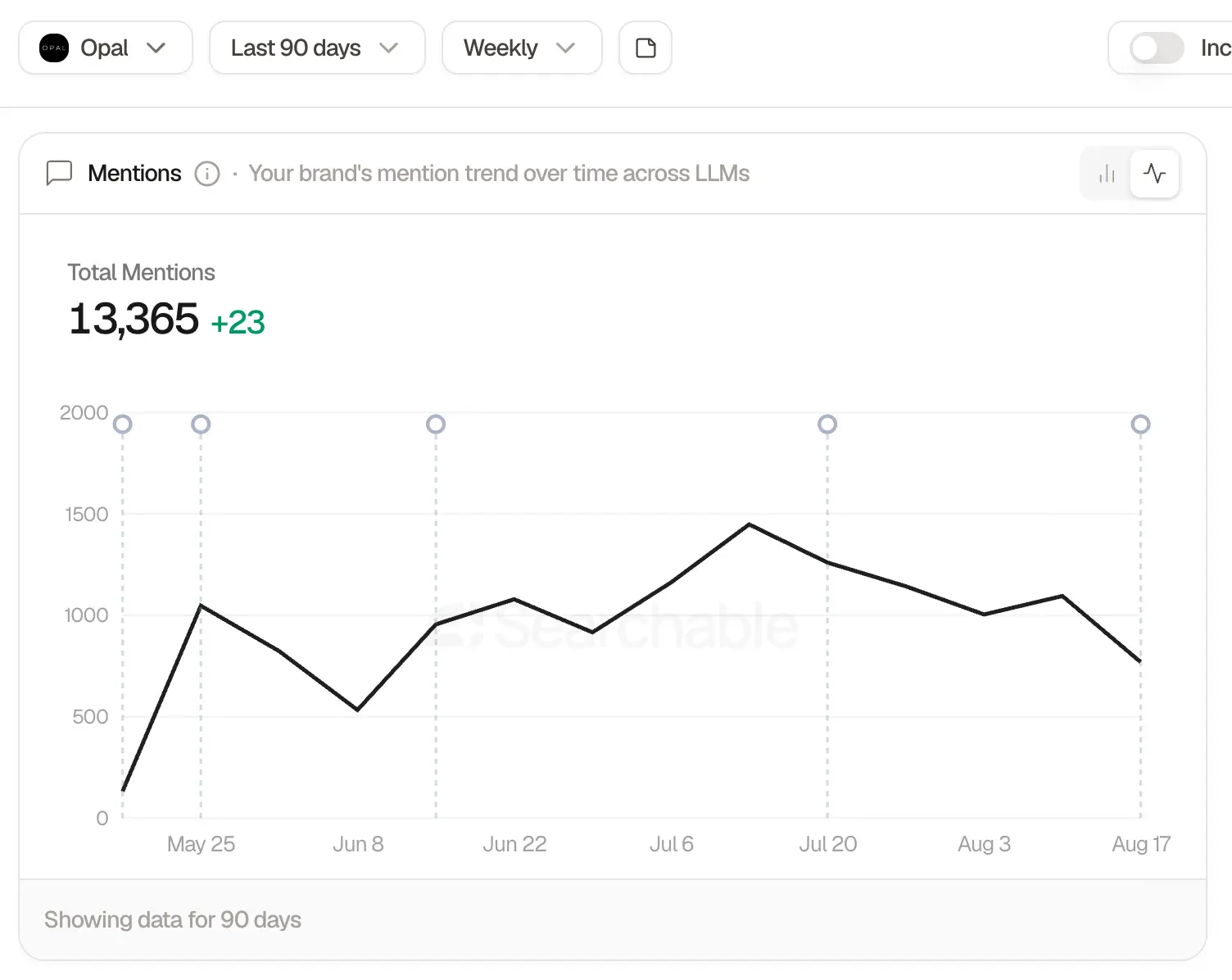
Searchable mentions chart showing 13,365 total mentions
Across broader brand monitoring, Opal generated 13,365 AI brand mentions during the 90-day period. At the start of the engagement the weekly mention count was near zero. By the end it was running at roughly 1,000 per week. Those mentions were increasingly coming from non-branded searches around ad-spend cards, virtual cards, cashback and financing — buyers who had not already heard of Opal by name.
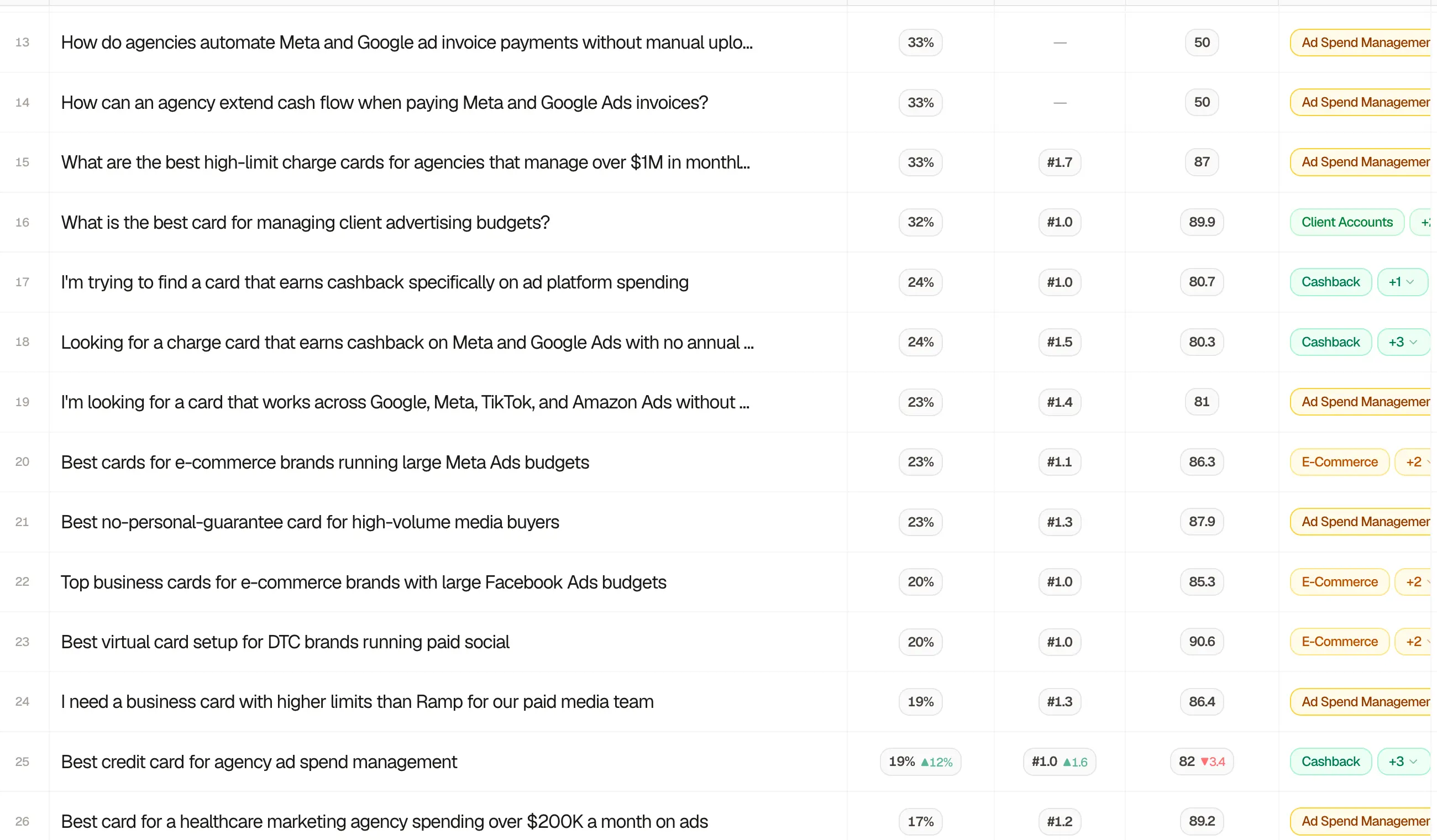
Searchable prompt tracker showing visibility percentages and #1 rankings across tracked buyer prompts
AI systems began citing Opal directly as a source and recommending the company within product-selection answers. Opal reached the leading position within its tracked Google AI Overviews competitive set and showed up as the top recommendation in ChatGPT for high-intent agency card queries.
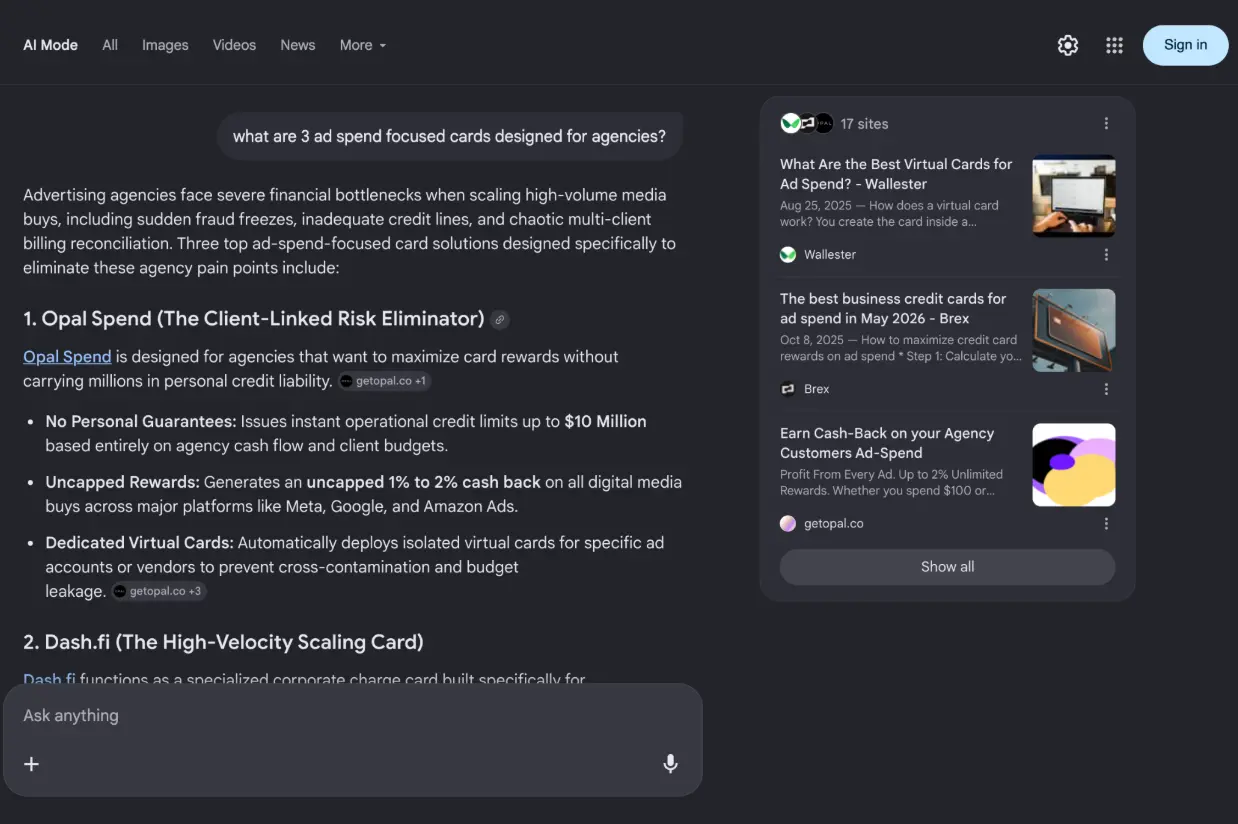
Google AI Mode: Opal listed #1 for “what are 3 ad spend focused cards designed for agencies?”
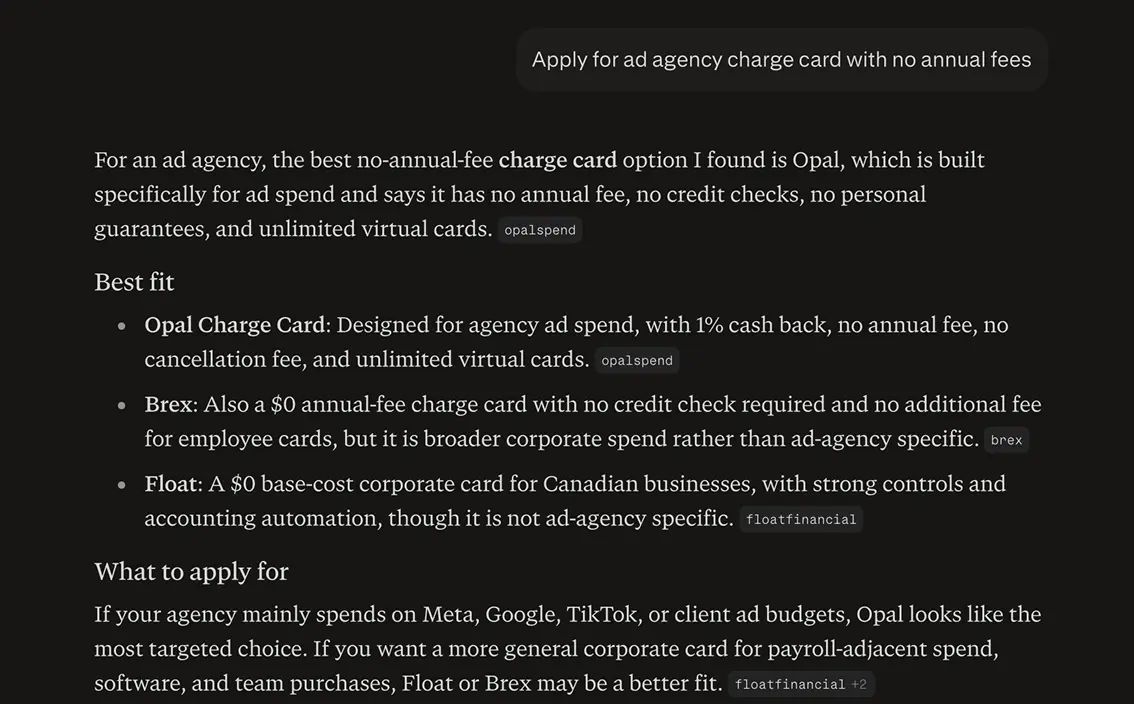
ChatGPT recommending Opal as the best fit for “ad agency charge card with no annual fees”
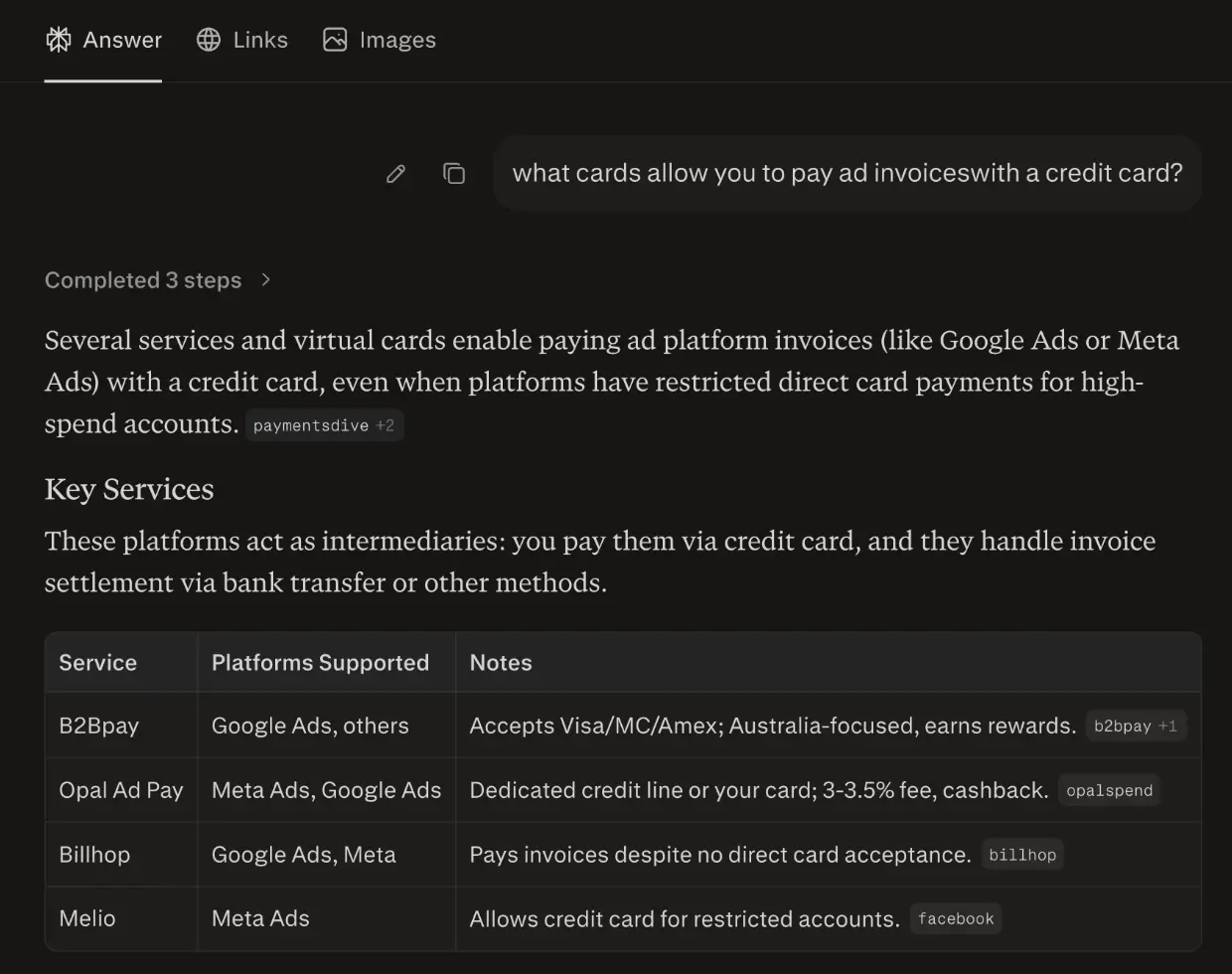
Perplexity citing Opal Ad Pay as a key service for paying ad invoices with a credit card
The new content also produced results in traditional search. Opal ranked #2 for both “ad pay” and “ad spend cards” shortly after launching its Ad Pay page. The blog content generated more than 1,500 Google Search impressions from non-branded topics in the same period.
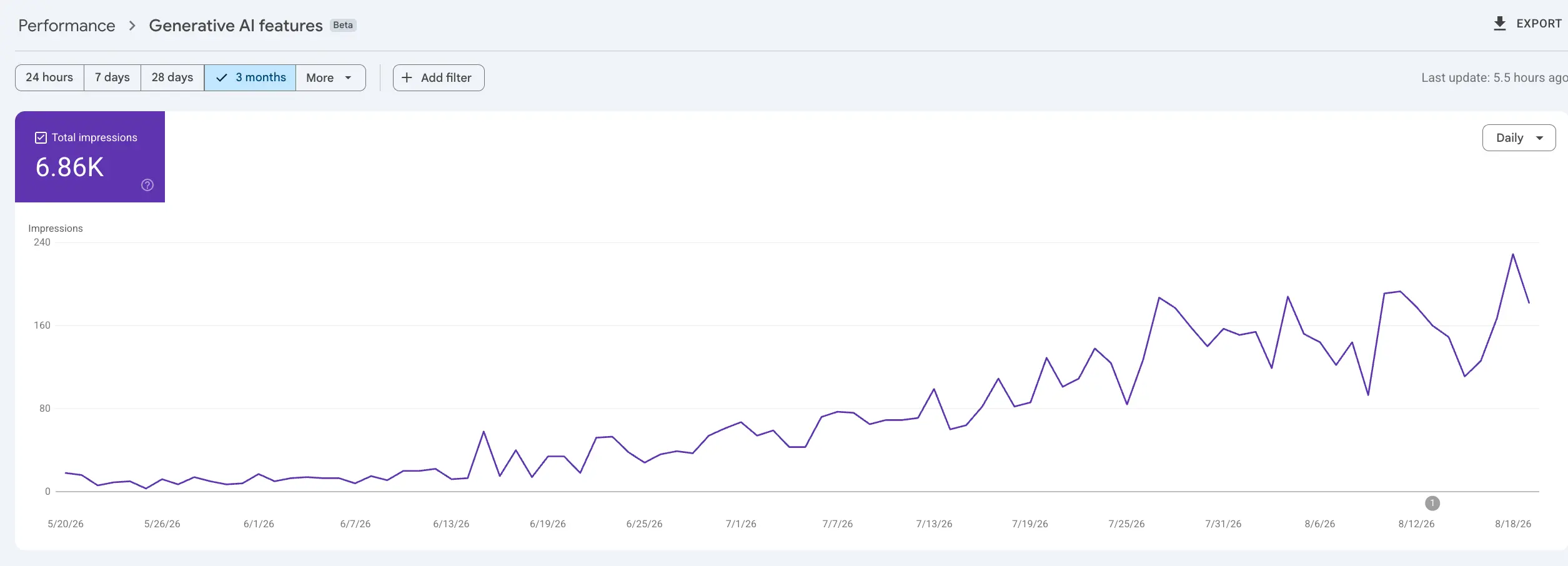
Google Search Console Generative AI features showing 6.86K impressions trending upward over 3 months
Technical health improved from 66.2 to 89.4, putting the site in the top 1% of tracked domains. Technical score reached 93.0 and AEO score 85.8.
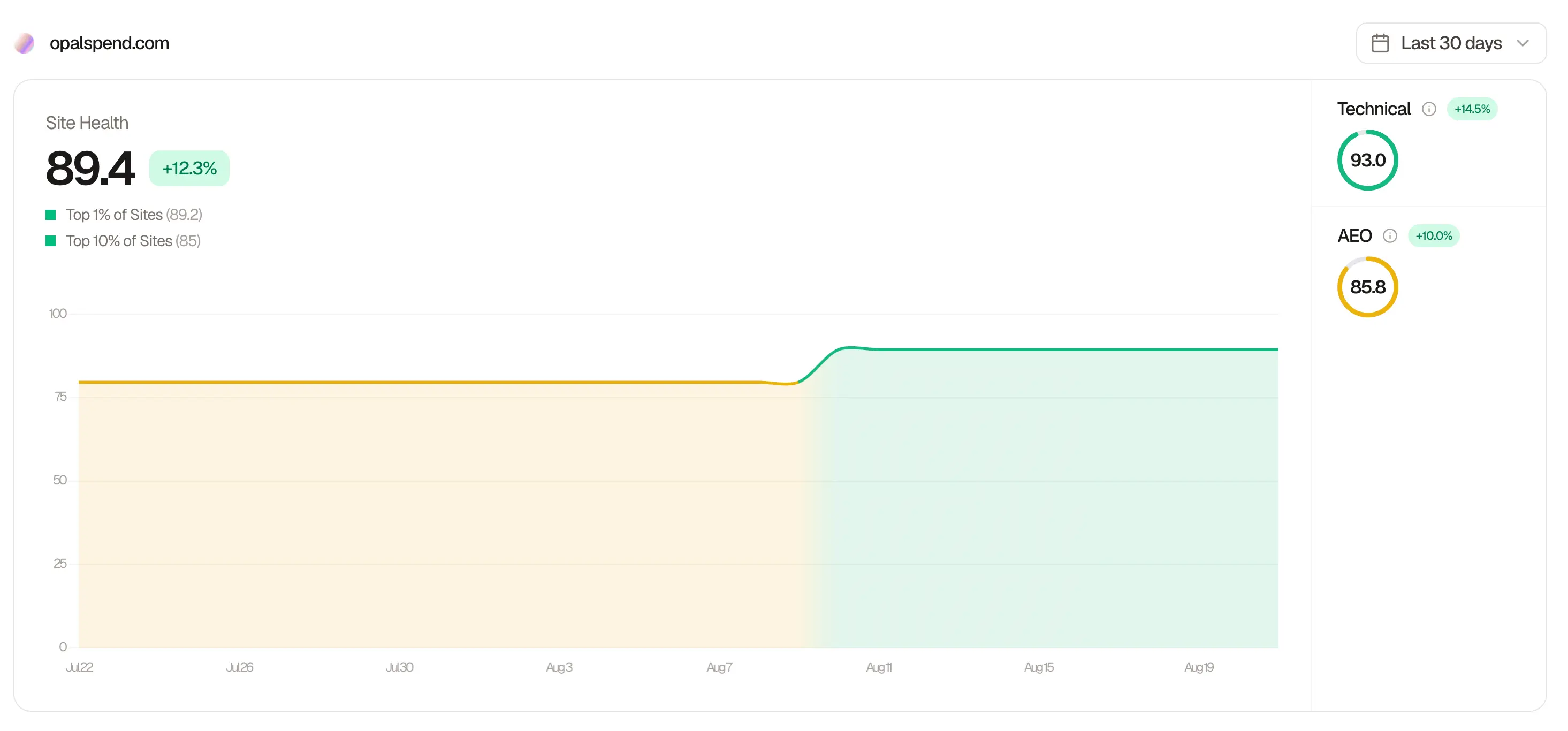
Searchable site health dashboard: 89.4 overall, Technical 93.0, AEO 85.8
In Summary
The starting point
• Strong product, but almost no AI-search footprint for systems to understand, cite, or recommend.
• No blog, no sitemap, weak metadata, and just four indexed pages.
Our strategy
• Rebuilt the technical foundation, resolving indexation issues and making core pages easier for AI systems and search engines to access.
• Published 60+ buyer-focused AEO articles and 13+ bottom-of-funnel pages around high-intent agency spend-management queries.
The results
• Generated 10+ demos per month attributed to AI search within 90 days.
• Increased tracked AI brand mentions from 3 to 39 and share of voice from 3.9% to 11.2%.
• Reached #1 in its tracked Google AI Overviews set and generated 13,365 AI brand mentions.
4
Core pages indexed and 60+ articles published
3
39
3.9%
11.2%
Near zero
Roughly 1,000
66.2
89.4
None recorded
10+ per month